15 November 2011

Jakarta weekend escapes

Life in Jakarta can be tough if you don’t get out now and then. The good thing is there are plenty of awesome weekend trips to do to escape the Big Durian. And yes it does occasionally smell like one. Krakatoa in our last post was one of the many we’ve done this year. Here are a few more we’ve managed to squeeze in over the last couple of months

Grand Final Weekend in KL (Candice: 29 Sept, Nat: 30 Sept – 2 Oct)

Although Candice left a couple of days earlier, this really was a weekend trip for me. Kuala Lumpur is only a couple of hours flight from Jakarta and is a welcome distraction every now and then for some good food. Although I have never really liked KL, it’s so much cleaner than Jakarta it almost feels like being in Singapore! We decided to catch up with some friends to watch the AFL Grand Final at a pub, an event hosted by the Malaysian Warriors Australian Rules Football Club. Thankfully much to the delight of everyone assembled Geelong thrashed Collingwood.

Bandung (29-30 Oct)


Asia-Afrika Street in Bandung

We’d been talking about going to Bandung for ages but kept putting it off. There’s an executive shuttle bus that leaves from almost right outside our front door and so one day we just booked tickets and went for the weekend. Leaving on the Saturday morning at 5.15am after a long dose of karaoke the night before probably didn’t help but at least we got two full days to play around with.


Bandung's art-deco buildings have seen better days

Bandung is the fashion capital of Indonesia and attracts hordes of local and international tourists for it’s “cheap” shopping. We couldn’t really see what all the fuss was about as the prices weren’t that low. The city has its drawcards but apart from some art deco buildings in the city and the shopping, there aren’t many places of interest and the museums are mediocre. Thankfully the day trips outside Bandung are amazing. We were able to get public transport to Tangkuban Prahu volcano and back. It took up a whole day but was worth it. There weren’t a whole lot of non-Indonesian tourists there which meant the souvenirs were tacky. It was colder than Bandung but not cold enough for fur coats and hats!


Candice at one of Tangkuban Prahu's active craters


The hotsprings


The eerie mountain mist and foliage made it look like something from LOTR


Waste not, want not. We'll just have to use it again.

Pulau Tidung (12-13 Nov)


Having already been to Tiger Island (Pulau Macan) with our expat friends earlier this year, it was time to try an Indonesian equivalent in the Seribu Islands. Pulau Tidung was about a tenth of the price and we managed to squeeze in a weekend trip with some of my Komnas Perempuan workmates.

Getting on the boat at Muara Anke


Children on the narrow streets of Tidung

It was a truly Indonesian experience and while we had a great time I don’t recommend Westerners come here if you’re not prepared to forego certain comforts you may be accustomed to. The electricity on the island had been out for almost a month but the tour agent hadn’t bothered to tell us that our ‘air-conditioned’ accommodation would actually be an oven.
There are about 2000 people who live on the small island and motorcycles are everywhere; no cars though as the laneways are too narrow. The island is probably only 50 metres wide but is a few kilometres in length. Technically it comprises two islands joined by a man-made bridge – and it’s definitely worth a weekend exploration.


Candice and Andy on the way to snorkelling


Sunset

Baduy (18-20 Nov)

The Baduy people are a small indigenous community that live only about 170kms from Jakarta in Banten. Ethnically and linguistically Sundanese, the Baduy have lived in relative isolation for at least 400 years. They are accorded a special status by the Indonesian government and live in a large forest reserve. The Baduy shun modern technology such as electricity and machinery. They are culturally forbidden to use modern vehicles and must walk barefoot everywhere. Often they will walk for days to cities like Bandung and Jakarta to sell their wares.


The Baduy village we stayed in

The population of less than 10,000 people are separated into two clans: the Inner Baduy (Baduy Dalam) and the Outer Baduy (Baduy Luar). The Outer Baduy villages form a ring around the Inner Baduy villages and are tasked with protecting the latter from outside influence and visitors. The Inner Baduy only wear white or black traditional cloth and safeguarding Baduy culture, rituals and sacred sites. The Outer Baduy on the other hand usually wear blue or black traditional dress. It was common to see young Outer Baduy males wearing modern dress – some even had Blackberries (who knows how they charge them without electricity). Some live on the fringes and are permitted to use vehicles. School is forbidden for all Baduy and very few can speak Indonesian.
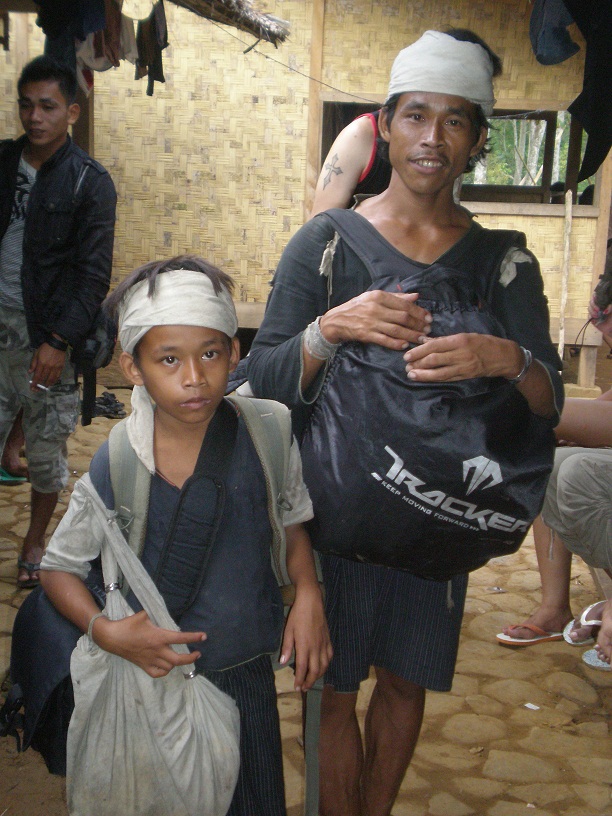

An inner Baduy father and son acting as porters


Some of our group pose as Baduy women walk by


The river which is the source of everything

We were privileged to be able to visit the Outer Baduy for a weekend with a cool travel group we’ve discovered called Road Less Travelled. We stayed in an Outer Baduy village but unfortunately non-Indonesians (including Indonesian Chinese) are forbidden from visiting the Inner Baduy. We did however meet many Inner Baduy people who travelled through the village we were in.


Anjee and I opening durian of which were not in short supply


The naturally-formed hanging bridge which took 50 years to grow

And no our life isn’t just about travelling but we want to showcase some of the cool weekend trips one can do from Jakarta.

11 November 2011

Krakatoa, an Island Volcano

On the weekend of 17 September 2011 we set out for the famed volcano-island of Krakatoa with Horst, Alice and Farina. Located in the Sunda Straight, Krakatoa is only a few hours away from Jakarta.


The boat ride

The volcano achieved infamy in 1883 when it erupted killing approximately 40,000 people and affecting the world’s weather and skies for the next 3 years. Extraordinary sunsets and skies could be seen as far away as Northern Europe. The eruption was so great that it blew the whole island apart, leaving nothing in the middle but sea. Decades later in 1927, an island began to emerge from the sea in place of the old crater and it was aptly named Anak Krakatau (Child of Krakatoa). This newer addition now forms the centrepiece of the Krakatoa islands and regularly erupts. Other than lizards, birds and insects, the island is uninhabited and still highly volatile.


Krakatoa

After a 1 ½ hour boat ride, we spent time snorkelling around Rakata Island and then hanging out on Krakatoa itself. The islands themselves are uninhabited and but the fertile soil ensures quick growth after each eruption. The sand was black. After a barrage of 'crack' jokes, we pitched our tents for the night and proceeded to climb the mountain. The ascent was relatively easy except we were not able to go all the way to the summit as it was too dangerous.


At Rakata


Jetstar jumps on Krakatoa


View of the smoky summit as we climb


Climbing the volcano


View of Rakata Island from the mountain

Krakatoa looms out of the sea like an angry chimney. Lined with sulphur, it looks like it is snow or ice-capped. In fact the higher you climb, the hotter it gets. From the high ground we were able to see the other three islands in the group: Sertung, Panjang and Rakata.


Our guide, "Black" recounted an incident a few months prior when he was climbing the volcano with two French tourists and it suddenly erupted, hurling head-sized boulders down the mountainside. The three of them ran for their lives and thankfully nobody was injured. He predicted the volcano would erupt in approximately two weeks time. Sure enough, two weeks later we read that it was a no-go zone.


Cheesy video evidence that we've been to the Big Krak


Great snorkelling around Krakatoa


Lunch in Carita the next day


10 September 2011

Flores and Komodo Dragons


As we mentioned in our last post, throughout the month of August it was Ramadan in Jakarta. This is a time when Muslims fast for the entire month and at the end they have a holiday called Lebaran where the fast finishes. Everyone in Indonesia gets about a week off for Lebaran. At this time there is a mass exodus from Jakarta as everyone goes back to their hometown to be with their families. So Nat and I thought it would be a great opportunity to get out and see some of Indonesia and as we knew that it would be crazy in the Muslim-populated areas of Indonesia we opted for a trip to the predominantly Christian island of Flores.


The view from the water from a hill in Labuan Bajo


Flores was spectacular! The landscape was completely different to anything we had ever seen in the South East Asian region. It is the dry season at the moment and it was completely dry! We flew into Labuan Bajo which is the fastest growing city in the province of Nusa Tenggara. This is because Labun Bajo is the gateway to Komodo and Rinca Islands where the unique and dangerous Komodo dragons can be found. However, Labuan Bajo does not resemble much of a city it looks more like a haphazard construction site.


We ventured out of Labuan Bajo on a two-day, one-night trip to Komodo and Rincah islands. The boat we took had no life jackets and no radio, even though we had been assured that these would be provided - welcome to Indonesia. We cruised around a number of different islands en route to Rincah island. Rincah is the less-famous and smaller version of Komodo. Here Komodo dragons can also be found as well as monkeys, wild buffalo and bird life. When we arrived on the island we were greeted by our first Komodo dragon that was sunning itself by the entrance to the island. The guides on the island took us around with a stop off at the kitchen used by the rangers. Underneath the kitchen were heaps of Komodo dragons. They are not fed by anyone but they apparently come because they can smell the food. After this we went on a big tour of the island and saw the nests in which the female Komodo dragons lay their eggs. We eventually came to a watering hole where three wild buffalo were bathing. Lying near by, quietly, were two Komodo dragons waiting for their opportunity to bite and kill the buffalo.


Trekking Rincah Island


Komodo dragons


A Komodo dragon can eat half its body weight in food. To kill a buffalo they will attack it while it is in the watering hole and bite it. A komodo dragons bite has over 60 types of bacteria in it therefore the bite will eventually kill the buffalo. It can take up to two weeks for the buffalo to
die but the Komodo dragon will wait patiently and then gorge itself on the buffalo. Komodo and Rincah are actually quite big and way too large to walk around in a day. There are even villages on both islands which existed before the whole area was gazetted as a national park. The locals have

grown used to living with Komodo dragons and everything is on stilts. Komodo dragons have been known to kill and eat humans (especially children) so it’s worth taking precautions.


On our way back to our boat we went by the kitchen again where we spotted two Komodo dragons passionately mating (as it is mating season at the moment)! What a sight!


Komodo dragons mating


Our trip continued on with some snorkelling around the islands. It was amazing and so colourful with millions of fish. However, you can see the damage that tourism and fishing are doing to the reefs and I am not sure that it will look so beautiful in years to come. We visited the famous “Pink Beach” which has a pinkish tinge due to red coral in the sand. Unfortunately while snorkelling we were all attacked by thousands of little prickles in the sea that must be related to jellyfish. They stuck to our clothes and hair and stung like hell! Nat: I have still not been able to identify these thorn-like creatures but perhaps they were jellyfish larvae.


The random prickles that attacked us


That night we slept out on the boat, which literally meant we slept on some mattresses on the deck of the boat. It was so quiet and so nice to be under the stars.


Pink beach - where the sand looks pink


Sunset


The next day we continued onto the famous Komodo island. The scenery here was spectacular and we saw many more Komodo dragons sunning themselves in the morning sun. We also saw jungle chickens, wild boar and deer. The island seemed to be teeming with life. After Komodo island we went to some deeper waters to try and find manta rays! What an experience that was! As the boat sailed through the water we found huge manta rays flipping there fins above the surface at the same time the guide on the boat told us to jump in (with our snorkel gear on) and follow the rays. Candice saw a couple but Nat was too slow in jumping in and missed most of the rays.


Komodo island


As close as Nat dares to get


For our last two days in Flores we went out to another island (Seraya Island) and stayed the night in some very cute bungalows. It was very relaxing and nice to lie on the beach. Nat went for an exploration of the island and found many goats running around, some were even in trees.


On our last day in Flores we headed inland to a beautiful waterfall. It was incredible to see the ever changing land scape of Flores. The people up in the villages were extremely poor and it was
a bit of a shock to the system after seeing all the wealth in Jakarta. We trekked through rice fields and forest to get to the waterfall while a hoard of local children followed us and taught us words in their local language, Manggarai. The waterfall was beautiful and freezing and well worth the trek. Once we trekked back to our staring point we sat down and some of the other people who were with us shared their food around with the local children. It was amazing to see the children break biscuits in half and share them with the other children. No one asked us for money and no one tried to sell us anything. They were a group of people who were as intrigued to see us, as we were to see them.


To cap off our trip we popped in to Bali for a couple of days to visit fellow-volunteers Dennis and Deborah. Whatever the criticisms of the fact Bali is too touristy, we have to admit Legian beach has beautiful sunsets!