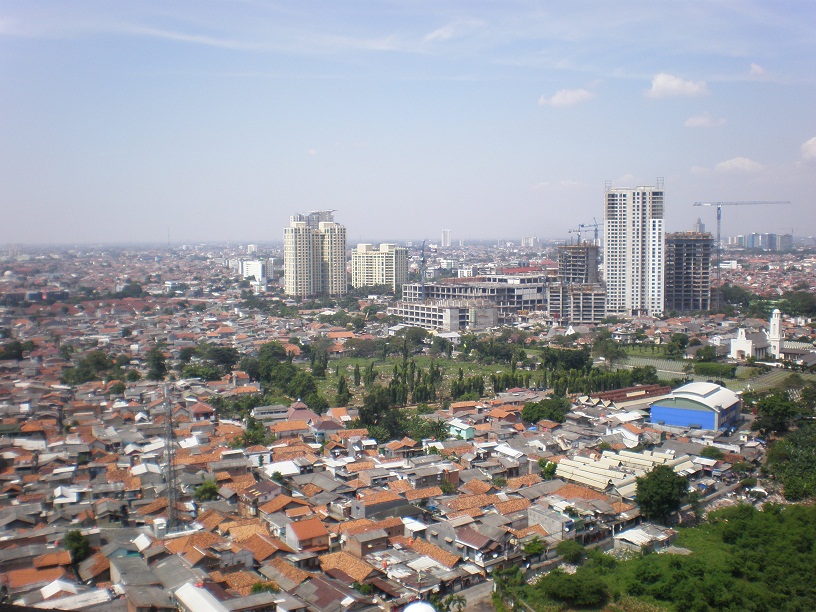
The last few weeks have been interesting as it’s been the Muslim fasting month of Ramadan and we’ve had some family visit from Australia. Jakarta is mostly Muslim and so when Ramadan started on the 1st of August, it means most eateries are shut (or at least visibly shut) during the day. The month of Ramadan is supposed to be when Muslims reflect on spiritual things and fast between the hours of about 5am and 6pm. This includes abstaining from drinking water, smoking, swearing and marital relations. This means things generally slow down, work finishes an hour early and everyone else feels guilty for eating. For me (Nat), work continued to cater for us as many people at Komnas Perempuan are non-Muslims. The nightlife in Jakarta appears to quieten down a bit during this period and many establishments pretend to be shut so that they are not smashed up by zealous Islamic moral hardliners.

Excited Muslims riding atop a van on a highway at high speed
While Ramadan is not always the most exciting time for tourists, it does present an interesting cultural perspective to the visitor – plus it meant our pool was usually free during the day!
Trips here and there
Tiger Island
We try and get out of Jakarta as much as possible on weekends. We have a few expat friends who share this passion too and together we’ve been trying to experience as much of Indonesia as we can while we’re here. In our last post in July we mentioned a bit about some of the things we get up to but we forgot to mention Pulau Macan (Tiger Island).

Candice wading between Tiger Island and its sister island
If you’re on a tight schedule or only have the weekend to spare, taking a trip to the Seribu Islands is a great choice. The word ‘seribu’ means a thousand but there are more like about 50 islands. These islands are just off the coast of Jakarta and can be reached by boat within a few hours. They range in size, popularity, accommodation price and standard but one of the pricier options is the Tiger Island Eco Resort. Mainly visited by expats, a night here will set you back about $200 (including transport, food and accommodation) but it’s totally worth it. The island is tiny and is privately owned. About 100 metres away is another uninhabited island also owned by the same mob which you can swim, wade or kayak to. Accommodation is in open-air huts and the food is excellent. There are some great snorkelling trips and by the end of the two days it feels like you’ve been there forever. Gee this is starting to sound like an ad. Anyone in Jakarta with a weekend to spare check out the Pulau Macan website.
In July we went with friends Leslie, Cambria and Manuela. Here are some pics:


Cianjur and Oz Visitors
Enter Sandman karaoke

Candice and Larissa
We were also able to take Odette on a weekend trip to Cianjur. Cianjur is about 2 and a half hours drive from Jakarta. We stayed with an awesome home stay program, as this trip was really off the beaten track. It was so great to breathe in fresh air and experience what life is like for Indonesians who live outside of Jakarta. On the Saturday we went to a floating fishing village and saw how they farm fish and live on a dam. On Sunday we did a trek to a traditional rural village. It was so relaxing to walk through rice paddy fields and to take in all that precious fresh air. The people in this village not only farm rice, but they also farm zucchinis, beans, palm sugar, lemon grass and bananas. All this they take to the markets to sell. When we arrived at the house all the women were making a traditional sweet out of the palm sugar, which they then go and sell back in Cianjur. It was a very interesting experience and such a great time to show Odette a different side of Indonesia.
Riding a boat through the water village

The water village on the dam

Our preferred mode of transport: back of truck

Village rice paddies

Three little pigs

Making palm sugar to sell at the market

Delicious lunch in the Sundanese village
Back to town after a long day's trek


Having a 'creambath' and posing with a pig hat
Trips here and there
Tiger Island
We try and get out of Jakarta as much as possible on weekends. We have a few expat friends who share this passion too and together we’ve been trying to experience as much of Indonesia as we can while we’re here. In our last post in July we mentioned a bit about some of the things we get up to but we forgot to mention Pulau Macan (Tiger Island).
Candice wading between Tiger Island and its sister island
If you’re on a tight schedule or only have the weekend to spare, taking a trip to the Seribu Islands is a great choice. The word ‘seribu’ means a thousand but there are more like about 50 islands. These islands are just off the coast of Jakarta and can be reached by boat within a few hours. They range in size, popularity, accommodation price and standard but one of the pricier options is the Tiger Island Eco Resort. Mainly visited by expats, a night here will set you back about $200 (including transport, food and accommodation) but it’s totally worth it. The island is tiny and is privately owned. About 100 metres away is another uninhabited island also owned by the same mob which you can swim, wade or kayak to. Accommodation is in open-air huts and the food is excellent. There are some great snorkelling trips and by the end of the two days it feels like you’ve been there forever. Gee this is starting to sound like an ad. Anyone in Jakarta with a weekend to spare check out the Pulau Macan website.
In July we went with friends Leslie, Cambria and Manuela. Here are some pics:
Cianjur and Oz Visitors
Candice: My sister and her boyfriend, Larissa and Michael, came to Jakarta for a couple of days. We were able to show them the massive shopping malls and constant traffic jams that Jakarta has to offer. It was a great time with a trip to the Magnum restaurant where you can make your own magnum and a night out at Karaoke.
Enter Sandman karaoke
About a week and a half after Larissa and Michael left my other sister Odette came to visit. She had been living in China and was on her way back home to Australia with a stop off in Indonesia. We took Odette on the standard tour of Jakarta, again visiting the shopping malls and the famous Magnum cafe as well as the old town of Jakarta and the markets out at Tanah Abang.
Candice and Larissa
We were also able to take Odette on a weekend trip to Cianjur. Cianjur is about 2 and a half hours drive from Jakarta. We stayed with an awesome home stay program, as this trip was really off the beaten track. It was so great to breathe in fresh air and experience what life is like
for Indonesians who live outside of Jakarta. On the Saturday we went to a floating fishing village and saw how they farm fish and live on a dam. On Sunday we did a trek to a traditional rural village. It was so relaxing to walk through rice paddy fields and to take in all that precious fresh air. The people in this village not only farm rice, but they also farm zucchinis, beans, palm sugar, lemon grass and bananas. All this they take to the markets to sell. When we arrived at the house all the women were making a traditional sweet out of the palm sugar, which they then go and sell back in Cianjur. It was a very interesting experience and such a great time to show Odette a different side of Indonesia.Riding a boat through the water village
The water village on the dam
Our preferred mode of transport: back of truck
Village rice paddies
Three little pigs
Making palm sugar to sell at the market
Delicious lunch in the Sundanese village
Back to town after a long day's trek
Work and other stuff
Nat: Compared to July, work at Komnas Perempuan has been a lot slower. I’ve mainly been working on translations with a bit of research here and there but things are going to pick up come September and the Eid-il-fitri holidays are over. This has meant though that I’ve been able to start an English Club at work. This is part of the effort to improve and encourage the use of English at the commission and due to the number of people interested, I hold 3 sessions a week after hours. Although I have stressed that it’s not a class, I am not an English teacher and I am not really qualified as such, my colleagues persist in calling me ‘teacher’ and asking about ‘class’. I have given up and embraced the misnomer. English Club has been fun so far – we read articles, have discussions, play games and learn new words. The only drawback is that I have to do brief ‘lesson plans’ that can impinge on my actual daily duties. Thankfully so far it hasn’t been too much of a problem.
Candice has been edging closer to getting an official assignment with Sahabat Anak as well. Fingers crossed that everything will be sorted by September.
Before we arrived in Jakarta we thought we would definitely purchase bicycles to get around. This way we’d keep fit and save money. A few weeks ago we went looking for second-hand bikes but couldn’t make up our minds. We’re still undecided at this point as my office is fairly close to home, we can get around cheaply by public transport and cycling in Jakarta is not as pleasant as we had envisioned.
Candice has been edging closer to getting an official assignment with Sahabat Anak as well. Fingers crossed that everything will be sorted by September.
Before we arrived in Jakarta we thought we would definitely purchase bicycles to get around. This way we’d keep fit and save money. A few weeks ago we went looking for second-hand bikes but couldn’t make up our minds. We’re still undecided at this point as my office is fairly close to home, we can get around cheaply by public transport and cycling in Jakarta is not as pleasant as we had envisioned.
Having a 'creambath' and posing with a pig hat